
WHY “CULTURE” BECAME A MANAGEMENT PLACEBO AND WHAT TO DO INSTEAD
8 min read

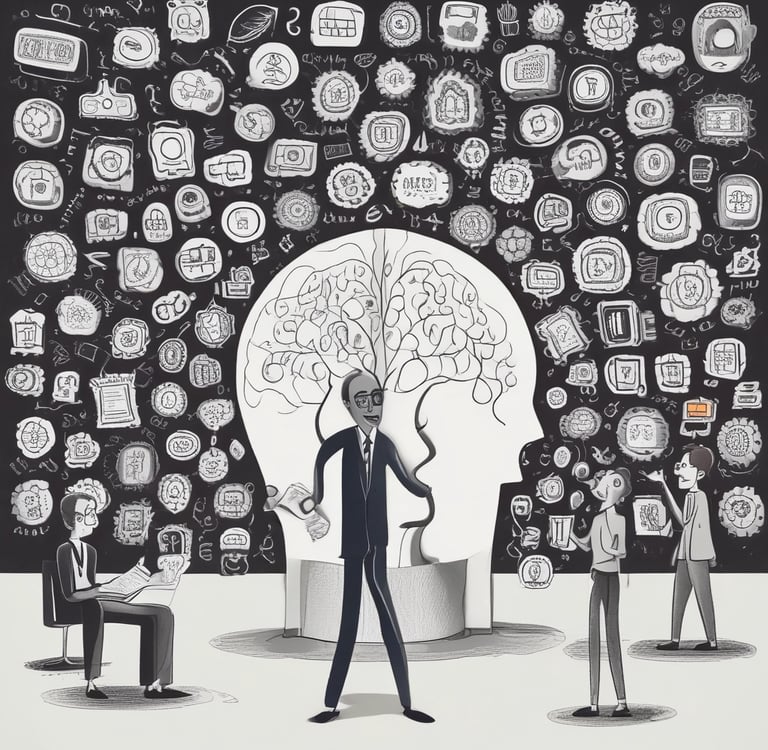
Let’s start with the uncomfortable bit. The claim (leadership and HRM) to “shaping and maintaining the organization’s culture” sounds noble. Having “responsibility for culture” and “owning” it is presumptuous. “Ensuring conformity” and “promoting values” is outright totalitarianism. In practice it tempts leaders and HRM into roles they can’t own, a mandate they can’t credibly deliver, and a drama world that inflates burnout and credibility problems. Yet culture isn’t something to shy away from; it’s about revisiting what we actually mean by “culture,” being cautious about presumptions of “change,” and much smarter at leveraging influence. Culture is an overused term that has led many down a path of superficiality. HR, and the rest of the enterprise, pay the price.
Culture isn’t a product line HR can manage. It’s the residue of how an organization repeatedly solves problems in its environment: strategy, structure, power, technology, markets, and the trade-offs they force. Those solutions become codified because that’s what worked. When HR claims to “ensure” or “promote” a “positive” culture, it drifts into social engineering, substitutes moral language for causal design, and becomes visibly responsible for outcomes it doesn’t control. That’s not a comfortable place to reside.
This article argues for a pragmatic shift. Stop treating culture as a weapon – something to shape, signal, and police – and treat it as a system to understand, connect, and nudge. Values and commitments are instrumental: they persist when they help the organization survive and win, and they get shelved when they don’t. That’s not culture folks. The widely lamented “failure” of change and transformation programs isn’t a moral failure; it’s often a mismatch between loud symbolism and quiet operating reality. Let’s unpack why, and what to do instead.
CULTURE AS CONCEPT: UNSEEN, UNCRITICAL
First, culture is an emergent survival system, not a top‑down program. Edgar Schein described culture as shared basic assumptions learned by a group as it solves problems of external adaptation and internal integration; assumptions that “worked well enough” to be taught as the correct way to perceive, think, and feel. Culture is validated in action, not declared in slides or away days. It changes when new solutions produce better results repeatedly over time. Or protect against what’s felt to be a threat (whether it is or not, is another question). That means visible culture campaigns operate at the level of superficial values and symbols, while the engine sits in routines, incentives, power, and outcomes.
Second, culture is unconsciously and uncritically adopted. If you set out to change culture in the full light of day, so to speak, you’ve probably already drifted into behavior mandates, communications choreography, or moralized branding. People recognize it. As soon as you proclaim “We’re changing culture!” the next conversation is no longer about culture; it’s compliance, signaling, and control. Remember the “unconscious” and “uncritical” features of real culture?
Third, culture never fails. Culture is whatever a group learned to deal with in its environment to survive. Calling a culture “bad” is shorthand for “our assumptions no longer fit the environment or our strategy.” If layoffs, missed launches, or scandals follow a culture program, it wasn’t culture that failed. The design did. When HR centers itself as culture owner, it becomes the visible agent of failure dynamics it can’t control: market shocks, leadership churn, resource allocation, or contradictory incentives.
Finally, if culture emerges from unconscious and uncritical forces, how can we see it, let alone change it? Technically, we can’t, at least not directly. Most “culture change” is behavior modification dressed as virtue: mandatory values, training marathons, purpose posters, roadshows, and screen-savers. Fine, just say that. Presenting them as transformations of hearts and minds invites moral injury and cynicism when hard calls later contradict. Credibility is a casualty.
WHAT CULTURE IS AND ISN’T FOR HR AND LEADERS
What culture is, for management...
A pattern of shared assumptions validated by repeated success, sustained by routines and stories through experience.
Both a constraint and an asset: It accelerates coordination and learning when aligned; it locks into maladaptive patterns when misaligned. It is, by design, rigid in the short run. “Frame-breaking” assumption change is slow.
Measurable only by proxies (climate perceptions, behavioral indicators, narratives) that must be triangulated with operational data (workload, cycle time, quality).
What culture isn’t, for HR...
Not something HR can “own” or “ensure.” Culture sits mostly in managerial behavior, resource allocation, and work design. HR is embedded in culture and can’t stand outside to engineer it.
Not a moral domain to adjudicate. HR should define and enforce minimum standards (law, safety, dignity) and design coherent systems, but it should not police contested worldviews via performance systems.
Not a branding exercise. Poster values and roadshows are weak signals when detached from actual decisions (promotions, budgets, trade-offs, exit decisions).
Overreaching traps and misfires...
Identity inflation and centralization: “Owner of culture” invites HR to centralize approvals, adopt a policing stance, and inflate jurisdiction. That raises cycle time, reduces local learning, and paints HR as hall monitor rather than design partner.
Spurious diagnostics: Many culture surveys over-index on abstract adjectives detached from context. Without pairing them with workload, cost-to-serve, quality, safety, or customer data for example, they risk chasing vibes, not causes.
The failure-rate myth: The oft‑cited “70% of change fails” isn’t a scientific statistic. It’s a zombie number. Treating it as fate can become self-fulfilling: more control instead of better design.
Behavior-first interventions: Nudges and norm campaigns have mixed efficacy and often decay without reinforcing structures. They’re best used as amplifiers for real changes, not substitutes.
HR proximity risk: The closer HR is seen to “own” transformation, the more HR absorbs strain and reputational risk for choices made in strategy, product, or finance. Proximity without authority equals burnout and blame.
WEAPONS OF MASS INSTRUCTION (WMIs)
Organizations love WMIs. Big comms, storytelling, role-model cascades, training blitzes, performance system rewrites. These are visible, HR-curated salvos. Visibility is a double-edged sword: it creates attention, but it also triggers skepticism and reactance, especially if 30–40% are poorly executed or disconnected from the work. WMIs alone rarely shift assumptions; at best, they help people use new processes that are already making sense on the ground.
More promising and “deeper” moves exist:
Narrative and sensemaking: Use after-action reviews and decision journals to update shared stories about “what works here.” Normalize public examination of trade-offs.
Leadership development: Develop managers to run better systems, not to deliver better speeches. Teach them to align incentives, manage constraints, and make design changes safely.
Talent strategy alignment: Promotions, compensation, and staffing should loudly reward the behaviors you actually need now (e.g., platform thinking, reliability, customer obsession).
HR-led capability for reflection: Build simple, regular forums where teams interrogate how work really gets done, what’s helping, what’s hindering, and what to change next. This should feel like normal work, not a quarterly stage act.
COHERENT PATHWAYS: HARNESS, DON’T OWN
If culture is the by-product of what repeatedly works, then culture change follows design change. Let’s repeat that. CULTURE FOLLOWS DESIGN CHANGE. Three practical pathways (sounds boring but this is how culture gets made):
Activity-Based View
Change legitimate activities and routines that are already culturally endorsed. Instead of “be more collaborative,” redesign weekly ops to require cross-functional joint planning on real deliverables. Shift who attends incident reviews. Swap status meetings for decision meetings with pre-reads that force clarity about compromises. People adopt what helps them succeed today.
Attention-Based View
What leaders repeatedly attend to becomes the organization’s curriculum. Make your dashboard, forums, and questions your primary cultural instruments. Dial up leading indicators of customer friction or operational pressures. Dial down vanity metrics. Open escalation channels on a few “teach-the-culture” incidents and make them canonical. Attention allocation is cultural allocation.
Process-Based View
Make incremental, transparent process changes that accumulate into new norms without triggering identity threat. For example, introduce lightweight pre-mortems on all initiatives over a threshold; implement decision rights for specific domains; publish decision logs. Small, consistent process changes change what “works”; changing assumptions over time.
These routes avoid the disconfirmation-to-validation drama of classic “unfreeze-change-refreeze” OD. They operate in stealth mode: change how we work; let the stories catch up. This is the responsibility of leadership, not HR. HR advise, give insights, know your leaders, know the issues, and know the work that’s going on.
WHAT HR SHOULD STOP DOING AND DO INSTEAD
Stop doing this:
Stop claiming to own culture. Make line leaders owners of behavior and outcomes.
Stop using culture as moral cover. Don’t sell cost cuts or product pivots as virtue plays. Say the hard part plainly.
Stop mandating contested values. Set clear minimum standards (law, safety, dignity). Leave room for pluralism and disagreement.
Stop centralizing by default. Push design decisions to where the work happens; keep HR’s gating role for risk and standards.
Stop benchmarking virtue. Don’t chase top-decile engagement if your cycle times are broken. Optimize to strategy and constraints.
Do this instead:
Reframe the mandate: From “own culture” to “architects of capability system.” HR convenes, diagnoses, and helps leaders align structure, incentives, talent, and routines to strategy.
Prune the theater: Reduce campaigns; increase operating changes. If a WMI runs, tie it to a specific process shift and measure that.
Get closer to the work: Embed HRBPs in ops reviews and postmortems. Learn the constraints; design within them.
Make line leaders accountable: Bake behavior expectations into role charters and performance with evidence (decision quality, coaching frequency, safety adherence), not adjectives.
Use evidence and causality, not slogans: Run A/B pilots on process changes. Correlate climate shifts with lagging outcomes. Publish what you’re testing and what you learned.
Tie every “culture” ambition to work design: If you want “ownership,” rework job architecture and feedback loops.
Distribute the emotional load: Equip managers with scripts and forums to handle moral stress. HR is a coach and standard setter, not a back-up parent.
Communicate adult-to-adult: Be candid about compromises and constraints. Respect employees’ capacity to handle complexity.
ADDRESSING COMMON OBJECTIONS
“We risk greenlighting bad behavior.”
Minimum standards are non-negotiable. Set and enforce bright lines on legality, safety, and dignity. Beyond that, design out bad behavior: adjust incentives, transparency, and consequences so counterproductive acts stop paying. Culture preaching without consequence design is performative.
“But without owning culture, HR loses influence.”
The opposite. When HR drops the impossible promise to “ensure culture” and demonstrates causal literacy. This shows leaders how structure, talent, and incentives produce outcomes. HR’s influence grows. Credibility beats theater.
“Employees need a moral compass.”
Adults have moral compasses. Organizations need moral minima and coherent systems. Overreaching into worldview policing invites backlash and distracts from improving work. Give people clarity on the rules of the game and the reasons for compromises.
“Culture diagnostics help us see ourselves.”
Yes, if we triangulate. Use ideographic (internal) narratives to understand meaning; use outside measures to benchmark; connect both to behavioral telemetry and business outcomes. If a diagnostic is not tied to a design experiment, it’s an expensive mirror.
THE BOTTOM LINE
Culture is not a lever to yank; it’s a shadow your system casts. When strategy, structure, power, and process align and keep delivering, the shadow shifts. HR’s highest value is to help leaders make those alignments explicit, testable, and humane: less morality play, more system design. Harness culture by changing what repeatedly works. Let the posters follow the processes, not the other way around.

Read this and much more in:
The HR Paradox: Indispensable. Insecure. And How to End It.
And…
Organization Capability: Define. Measure. Govern. A Practical Guide for HR Management and Enterprise Leaders.
hello@orgmastr.com
©2024. All Rights Reserved

Operated by ORGMASTR OPC