
THE HR PARADOX. INDISPENSABLE, INSECURE, AND TIME FOR CHANGE
3 min read


Here’s the oddity. Under HR anxiety sits durability. HR reports threat, burnout, and existential doubt. Yet it persists and expands. In practice, HR is the front door for messy organizational problems. New strategy? HR, tell the story. Culture wobble? HR, fix the vibe. Performance dip? HR, change the people. The work is real.
So are the side effects: interventions that solve one problem and quietly create two more, plus some scar tissue. Over time HR becomes a sponge for organizational anomalies: accountable without authority, empathetic without insulation, and strategic without power. No wonder there’s fatigue.
The UK’s CIPD 2025 pulse survey of over 1,000 professionals showed mixed signals. On the one hand, respondents identify clear priorities: supporting line managers with people management (43%), fostering collaboration across the organization (37%), and developing organization development and change management skills (26%). On the other hand, that means that 57–74% disagree or apportion considerably less importance to these areas.
Perceptions of HR’s impact on business are nuanced: 62% view HR as favorably contributing to business outcomes, leaving 38% with a less positive view (note: this is HR’s perception of non-HR perceptions). Sixty-six percent believe HR is understood to work collaboratively toward business goals, leaving 34% who do not. Only 49% of HR respondents feel they have clear measures of success, meaning 51% do not! Forty-five percent think HR’s reputation has improved over the last five years; therefore, 55% see no improvement. 56% report the scope of HR activities has broadened, and 58% feel their employer supports the unique pressures of HR, which means a big 42% do not.
Even with reported progress, these figures are concerning. Literature and media also regularly flag burnout as a persistent trend. In other surveys, the patterns are striking. More than half of professionals are contemplating leaving the field in some surveys. A large Asia-wide study reports that 93% feel emotionally, physically, and mentally exhausted; 83% have taken time off in the year; and 58% have considered quitting the profession. All in 2024-25.
What explains these causes? Largely, emotional labor, limited resources, structural constraints, role ambiguity, competing priorities between employer and employee, and heavy workloads. They’re often framed as “outside pressures” imposed onto HR. Yet other surveys point to “in-house” pressures: a shortage of analytical capability, business and quantitative skills, insufficient career mobility, and a need for new pipelines into HR. Could these internal factors be shaping tensions too?
SECURE BY DESIGN
This isn’t about making HR “nicer,” louder, or more valorized. It’s about changing the system so the same inputs no longer yield the same outputs. If you work in HR, this isn’t an indictment; it’s an invitation. You’ve kept the wheels on while carrying contradictions most functions never face. If you’re a CEO, COO, or CFO, this is your move as much as HR’s. You don’t get a strategic people function by exhortation. You get it by design.
SOURCES
CIPD Pulse Survey, June 2025, Analysis: Recognition of the HR function in organisations.
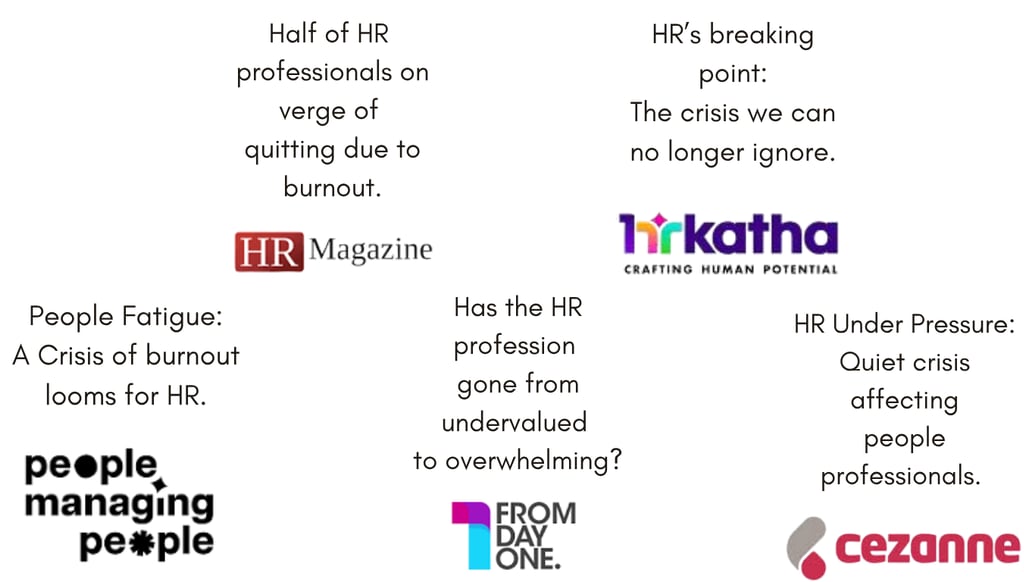
Millicent Machell (2024) Half of HR professionals on verge of quitting due to burnout. HR Magazine, Mark Allen Group, London.
Prijja Saha (2025) HR’s breaking point: The crisis we can no longer ignore. HR Katha.
January 2025 HR Under Pressure: The Quiet Crisis Affecting People Professionals. Cezanne, London UK (with HR Ninjas).
David Rice (2025) People Fatigue: A Crisis of Burnout Looms for HR. People Managing People, Black White Zebra, Vancouver BC, Canada
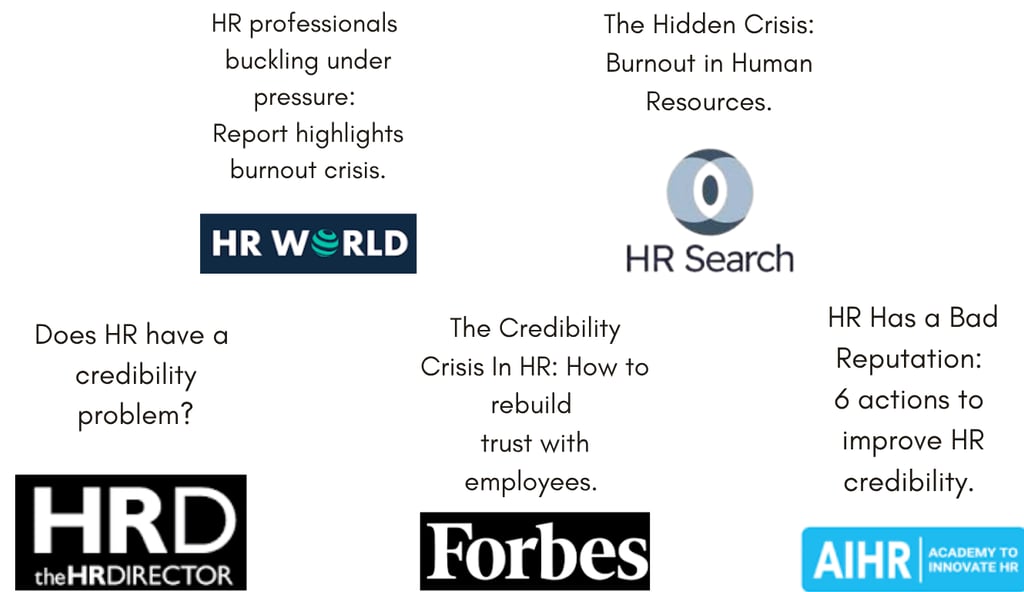
Kerri Masterson (2024) The Hidden Crisis: Burnout in Human Resources. HR Search, Ireland.
Paul Bauer (2025) HR professionals buckling under pressure: report highlights burnout crisis. The HR World, Bristol, UK.
AIHR (2025) State of HR.
Emily McCrary Ruiz Esparza (April 2023) Has the HR Profession Gone from Undervalued to Overwhelming? From Day One, Day One Media Inc. Brooklyn, NY.
Prijja Saha (2025) HR’s breaking point: The crisis we can no longer ignore. HR Katha.

link to the HR Paradox landing page
hello@orgmastr.com
©2024. All Rights Reserved

Operated by ORGMASTR OPC